If you own a house in Spain, three separate authorities can reduce what solar panels cost you, and they have nothing to do with each other: the national tax office, your autonomous community, and — the one almost nobody tells foreign owners about — your own ayuntamiento. This guide separates the three, and every figure in it names the document it was read on and the date it was read, which was August 5, 2026. There are no promises of an amount here. There is what the official text says, with the link so you can check it yourself.
The three layers, and why mixing them up costs money
- National. Income-tax (IRPF) deductions for works that improve a dwelling's energy performance. They do not depend on where in Spain you are, but they do depend on a measured result, proven with energy performance certificates issued before and after the works.
- Autonomous community. IRPF deductions each community sets for itself. Two of the four communities we work in have one; two do not — and we checked, rather than assumed.
- Municipal. Rebates on the property tax (IBI) and the building tax (ICIO), set by each town hall in its own ordenanza fiscal. These are potestative: the law allows a town to grant them, it does not require it. That single word explains why two neighbouring towns can be completely different.
There is a fourth thing you will see advertised that you will not find here: grant programmes with an application window and a limited pot of money. They open and they run out, and republishing one without checking it on the day you read it is exactly how a page like this goes stale. If one is open and fits your case when you install, we will tell you in the quote.
Layer one: the national IRPF deduction for energy improvements
These are three separate deductions with different rates, different ceilings and different deadlines. In the words of the legislation:
- 20% of amounts paid for works that cut the dwelling's heating and cooling demand, on an annual deduction base of 5,000 EUR, for works carried out up to 31 December 2026. Official source
- 40% of amounts paid for works that cut the dwelling's non-renewable primary energy consumption, on an annual deduction base of 7,500 EUR, also for works carried out up to 31 December 2026. Official source
- 60% for energy-rehabilitation works on predominantly residential buildings, on an annual base of 5,000 EUR and 15,000 EUR in aggregate, for amounts paid up to 31 December 2027. Anything you cannot deduct for want of tax liability carries into the following four years. Official source
Now the part the sales pages leave out. Installing photovoltaic self-consumption does not entitle you to these deductions by virtue of being installed. The statutory test is not a list of eligible equipment: it is a measured reduction in heating and cooling demand, or in non-renewable primary energy consumption, evidenced by energy performance certificates issued before and after the works. It is a test about the result for your dwelling, not about what you bought. If someone offers you "40% off your income tax for solar panels" without mentioning two certificates, they are selling you something that text does not contain.
The deadline has a history worth knowing. The deduction did not lapse at the end of 2025 — it was extended, by a messy route. Royal Decree-Law 16/2025 extended it and was then not ratified (repealed by resolution of the Congress on 27 January 2026), so the extension now in force comes from Royal Decree-Law 2/2026, article 10.Uno. That is why the 2025 Renta manual still prints a 31 December 2025 deadline: it is the manual for the 2025 campaign, not an expiry date. An English-language blog telling you the deduction is gone is simply out of date.
Whether you can use an income-tax deduction at all depends on how you are taxed in Spain, which is a question for your gestor and not for your installer. What we can do is give you the documents these deductions require, and the source text, so the conversation with your gestor starts from the ordinance rather than from a brochure.
Layer two: two communities where it exists, two where it does not
We install along seven coasts across four autonomous communities. We read each one's complete list of autonomic IRPF deductions in the tax office's own manual. The result is not symmetrical.
Comunitat Valenciana. The most relevant single line in this article for a Costa Blanca property: 40% of the amount invested in self-consumption or renewable-generation installations at a main residence, or 20% at a second home, on a deduction base of up to 8,800 EUR per dwelling per year. The property must be in the Comunitat Valenciana, payment must be traceable — card, bank transfer, cheque or bank deposit, so cash is out — and amounts covered by public grants do not count. Official source
Región de Murcia. It exists, and it is the only one of the four scaled by income: 50% below 35,000 EUR of taxable base, 37.5% from 35,000 to 45,000, 25% from 45,000 to 60,000, and nothing at or above 60,000 — on a deduction base of up to 10,000 EUR a year. It covers renewable installations for exclusive self-consumption, the property must be in the Región de Murcia, the invoice must come from an authorised installer, and photovoltaic systems whose surpluses are sold outside the compensation scheme are excluded. Official source
Andalucía and Catalunya have no autonomic renewables deduction. That is a finding, not a gap in our research. On August 5, 2026 we read each community's full list in the tax office manual: Andalucía lists 17 autonomic deductions and none is for renewables or self-consumption; Catalunya lists 13 and none is energy-related — its rehabilitation deduction is general, not energy-specific. If you are installing on the Costa del Sol, the Costa de Almería, the Costa Brava, the Costa Dorada or the Costa Barcelona, your autonomic layer is empty and your real reliefs are the national one and your town hall's.
Madrid, and any community not named above: we have not checked it. And "not checked" does not mean "does not exist". It is the distinction this whole dataset is built to preserve: an absent entry marks a document nobody has opened yet, never a document we opened and found empty. Never read the first as the second — here or anywhere else.
Layer three: IBI, ICIO, and the word "potestative"
The enabling law is the consolidated text of the Local Finance Act. Article 74.5 lets a town hall grant "a bonification of up to 50 per cent" of the IBI quota, and article 103.2.b "a bonification of up to 95 per cent" of ICIO, for systems that use solar energy for heat or electricity. Consolidated text in the BOE.
Two words in that sentence do all the work. "Up to" means 50% and 95% are ceilings, not rates. "Lets" means the rebate exists only where your town's own ordenanza fiscal creates it. That is what potestative means, and it is why a rate you read about in the next town along tells you nothing at all about yours. The law also requires the collectors to carry official type-approval, which is settled from the equipment's technical sheet.
ICIO, town by town
ICIO is the tax on construction, installations and works. You pay it once, when the installation is done, and it is the rebate most owners miss precisely because it does not come round every year the way IBI does. These are the 20 municipalities in our working area whose ICIO ordinance we read and which do carry a solar clause. Each line is a summary — the rate, its ceiling where the text sets one — and links to the document where the full conditions live.
Costa Blanca · Alicante
- Jávea — 95% off · applies only to the solar part of the works budget (Official source)
- Altea — 95% off (Official source)
- Dénia — 95% off · applies only to the solar part of the works budget (Official source)
- Moraira — 95% off (Official source)
- El Campello — 50% off (Official source)
- Rojales — 95% off · applies only to the solar part of the works budget (Official source)
- Benitachell — 50% off · applies only to the solar part of the works budget (Official source)
- Els Poblets — 95% off · applies only to the solar part of the works budget (Official source)
- Alicante — 50% off · applies only to the solar part of the works budget (Official source)
Costa del Sol · Málaga
- Fuengirola — 50% off · existing buildings at least 5 years old (Official source)
- Marbella — 95% off · applies only to the solar part of the works budget (Official source)
- Estepona — 50% off · applies only to the solar part of the works budget (Official source)
- Manilva — 40% off (Official source)
Costa Brava · Girona
- Begur — 50% off · applies only to the solar part of the works budget (Official source)
- L'Escala — 95% off · only for works whose sole object is the solar installation (Official source)
- Lloret de Mar — 50% off · applies only to the solar part of the works budget (Official source)
Costa Dorada · Tarragona
- Cambrils — 50% off (Official source)
Costa Barcelona · Barcelona
- Castelldefels — 95% off (Official source)
Costa Cálida · Murcia
- San Javier — 50% off (Official source)
- Mazarrón — 50% off · existing buildings only — new builds excluded (Official source)
Note the qualifier that keeps recurring: in many towns the ICIO rebate applies not to the whole job but only to the part of the works budget corresponding to the solar installation. That is why the budget filed with the town hall has to be itemised — and why we itemise it.
IBI, in summary
We hold a read, publishable IBI clause for 29 municipalities. Rates run from Vera's 10% up to the 50% legal ceiling, and terms from a single tax period in San Javier to five in El Campello, Rojales, L'Escala, Empuriabrava, Sitges, Castelldefels and the city of Alicante. Because it is the tax people search for and the one most often misread — a "50%" capped at 400 EUR a year is not half your bill — it has its own article: how the solar IBI rebate works, with the full town-by-town table.
The towns where we read the ordinance and there is nothing
This is the section no comparison site publishes, because it sells nothing. In these municipalities we opened the IBI and ICIO ordenanzas fiscales on August 5, 2026 and there is no solar bonification. It is a verified result, not a blank in our data:
- Benidorm — neither the IBI nor the ICIO ordinance mentions solar, energy, photovoltaic or self-consumption. A press proposal for a 50% solar IBI rebate was never enacted.
- Finestrat — no solar clause in either tax. The ICIO does carry a 40% energy-efficiency clause, but it covers passive measures — insulation, glazing, solar shading — and must never be presented as a photovoltaic rebate.
- La Nucía — the IBI ordinance published by SUMA has no article 74.5 solar clause at all, and the 2024 ICIO text states that exemptions, reductions and bonifications "are not contemplated".
- Mijas — no solar clause in either ordinance.
- Benalmádena — the consolidated texts in force from 1 January 2025 contain no occurrence of solar, energía, fotovoltaica, autoconsumo or renovable in either tax.
- Nerja — the texts the ayuntamiento publishes have no solar clause in either tax; the ICIO grants only 25% for protected housing.
Two more deserve a full sentence, because "there is nothing" would be too crude. In Alfaz del Pi the IBI ordinance does carry a 25% solar clause, but as drafted it reaches only properties whose cadastral record shows health-sector use over more than 25% of the built surface, and requires the installation to be thermal and electric at once. An ordinary residential roof satisfies neither limb, and the 2025 ICIO text grants nothing beyond what the law already sets. We record it as empty rather than as a benefit we cannot deliver. In Miami Platja the 2026 ordinances have no solar clause in either tax: all that survives is a transitional provision preserving the benefit for applications filed before 31 December 2024, so a new installation gets nothing — despite press coverage describing the rebate as "recovered".
What the aggregators say, and what the ordinance says
Reading the official texts turned up seven figures in circulation that the document contradicts. We keep them recorded in our own codebase so they cannot creep back in:
- Marbella. Widely published: "25% IBI for 5 years". The 2026 ordinance has no IBI solar bonification at all — though it does grant 95% on ICIO.
- Benalmádena. Published: "50% IBI". Neither ordinance contains any solar clause.
- Torrevieja. Published: "30% IBI". The ordinance says 50%, limited to three years — here the error works against the owner.
- San Javier. Published: "35% ICIO". The 2024 ordinance says 50%.
- Mazarrón. Published: "45% ICIO for photovoltaic". The 2023 ordinance says 50%.
- Benissa. Published: "50% ICIO". It appears in no ordinance Benissa publishes.
- Miami Platja. Published: the rebate has been "recovered". Only for applications filed before 31 December 2024.
How we checked this, and what the date means
No figure on this page comes from a comparison site or an installer blog. Each was read on the official document itself: the town hall's ordenanza fiscal, the edict in the provincial or regional official bulletin, the consolidated text in the BOE, or the tax office's own manual. Aggregators were used only to work out where to look — and in seven municipalities the official text contradicted them.
We have read the ordinances of 42 municipalities: 32 publish something, 8 were read and are empty, and 2 hold a clause we have found but cannot yet confirm as current. Five individual facts are withheld for the same reason and appear nowhere on this page — we hold them internally and publish them only once the authority confirms them. A missing fact is better than a wrong one.
The date is part of the fact. Ordenanzas fiscales are re-approved every autumn — published in the provincial bulletin between October and December — and take effect on 1 January. So everything here is verified as at August 5, 2026 and has to be re-checked each December. If that date looks old when you are reading this, that is information too, and it is deliberate. Before you sign anything, open your town's link and check the year in force.
What we actually do about it
What Enera can promise is not an amount, it is the work. We check what your town's ordinance in force says for your type of property, prepare the itemised budget the ICIO rebate requires, supply the installer certificate and the technical documentation, and file the application within the deadline — which in several towns is where the entitlement is lost, not in the technical requirements. The quote states what applies to your property and what does not.
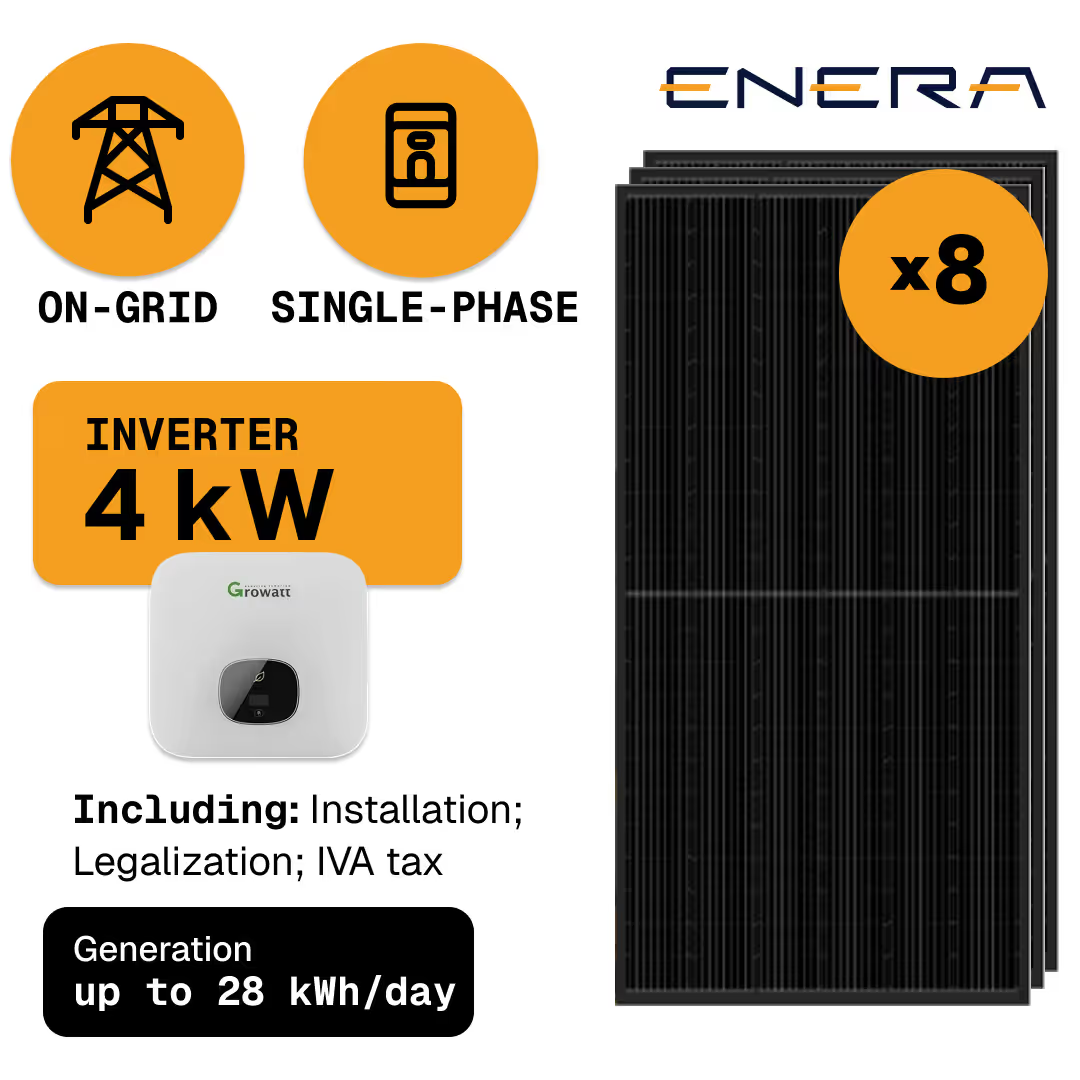
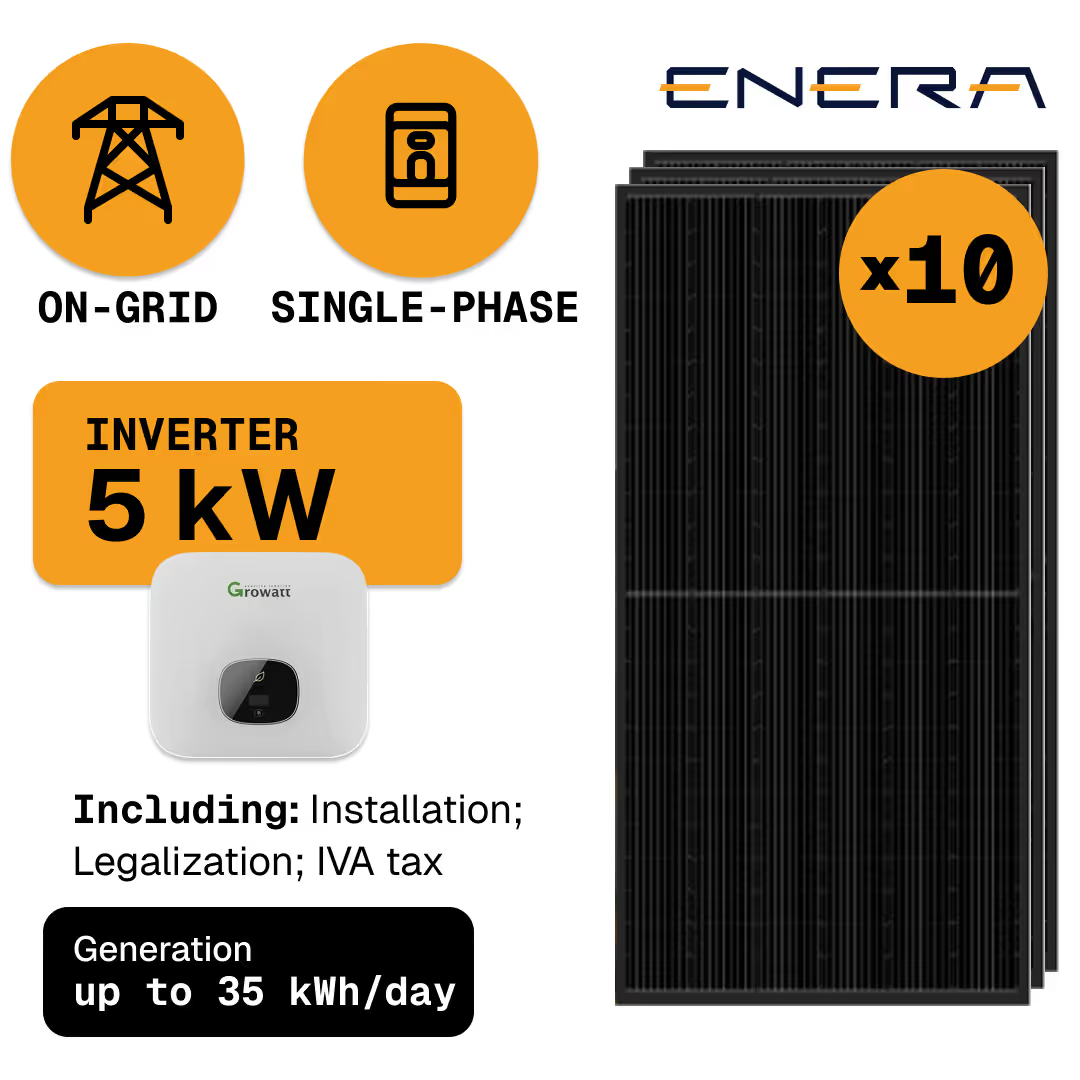
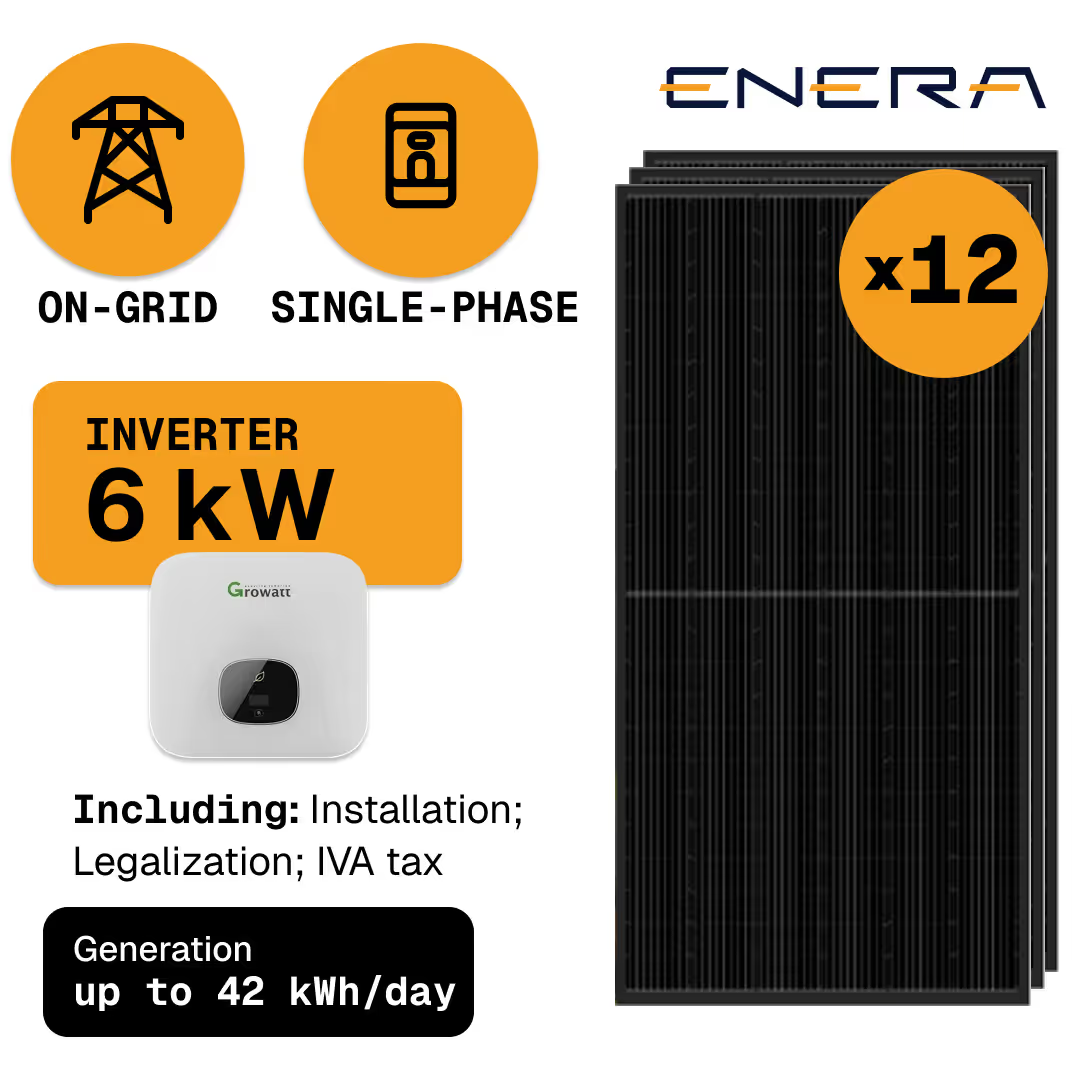
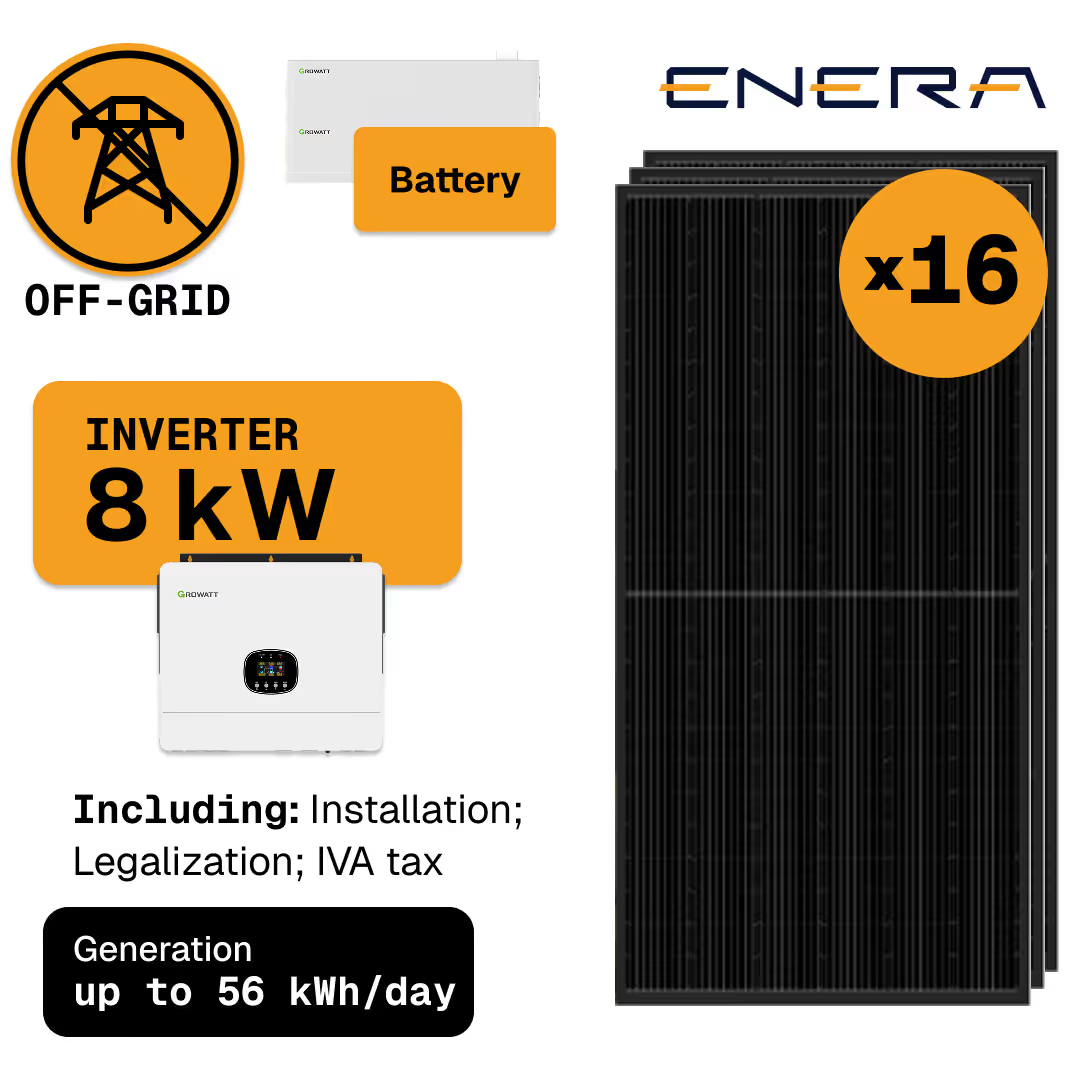
Every town page linked above shows these same facts live, because the coast and town pages read the same dataset and update when it does: if this guide goes stale, your town's page will not. Start from the map of where we work in Spain, from the calculator that reads your bill, or from the turnkey kits.
Frequently asked questions
Can a non-resident owner claim these solar reliefs in Spain?
The two layers behave differently. The municipal IBI and ICIO rebates are property taxes decided by your town hall, and the ordinances set conditions about the property and the installation — residential use, minimum power, the installation not being legally compulsory. Only one condition in everything we have read turns on the owner living there: El Campello requires the property to have been the applicant's habitual residence for at least a year before the application. The IRPF deductions are a different matter, because they are deductions in Spanish personal income tax — whether your own tax position lets you use them is a question for your gestor, and we will not answer it for you.
Are the national, autonomic and municipal reliefs cumulative?
They are different taxes — income tax on one side, municipal taxes on the other — so they do not exclude one another by nature. What does happen is that each has internal incompatibilities: several ordinances state expressly that their rebate does not stack with others on the same tax, and in IRPF amounts covered by public grants are excluded from the deduction base. It has to be read case by case, which is why every line on this page links to its own document.
Are there direct solar grants in Spain in 2026?
Direct grants are awarded through calls with a deadline and a limited budget, which is why this page publishes none: a call copied three months ago is a closed call. What is stable and checkable are the IRPF deductions and the municipal IBI and ICIO rebates, which is what you will find here with their document and their date. If a call is open and fits when you install, we will say so in the quote.
What is ICIO and why do people miss it?
It is the tax on construction, installations and works, paid once when the job is processed. It gets missed because it does not recur annually the way IBI does, and because many towns require the rebate to be requested before the works finish — in some, with the licence or the works declaration itself. In much of the wording only the solar share of the budget is rebated, so the budget must be itemised.
Why is my town not on this page?
Because we have not opened its ordenanza fiscal yet, and that is all its absence means — not that it has no rebate. Our data keeps three states apart on purpose: checked with facts, checked and empty, and not checked. We never fill in the third by analogy with a neighbouring town, because these rebates are potestative and neighbours genuinely differ. Tell us your town and we will check it for your quote.
Where do these numbers come from, and how often are they reviewed?
From the official documents: municipal ordenanzas fiscales, edicts in the provincial and regional bulletins, the consolidated text in the BOE, and the tax office manuals. Every figure links to the document it was read on and carries its verification date. Because ordinances are re-approved each autumn and take effect on 1 January, the review falls due each December — and a visibly old date is intentional, so you can judge the freshness yourself.