

Home battery storage in Spain: when it pays off, and when it does not
A home battery stores the solar your panels make during the day so the house can use it after dark. In Spain that is more often a comfort-and-independence decision than a purely financial one, because the country already has a mechanism that rewards you for what you export — and a battery competes with it.
Under compensación de excedentes, the electricity your system sends back to the grid is credited against what you draw from it on the same monthly bill. Without a battery your surplus is not thrown away; it becomes a discount. That is why we tell most homeowners on the Costa Blanca to install panels first and add storage once their own bills show how much evening and overnight consumption they really have.
This category currently lists 22 configurations from 5 to 45 kWh, starting at 1210 € including VAT — supplied and installed.
When a battery is worth it, and when it is not
Storage earns its keep when your consumption sits outside daylight hours: air conditioning through summer nights, an electric car charged at home, electric water heating, a pool pump on a night tariff. It is also a yes if your supply fails often and you want the house to keep running, and it is not optional at all on a rural property with no viable grid connection.
It is usually a no for a household that is out all day and already covers its own daytime load, for a holiday home that stands empty much of the year, and for any budget that would do more work buying more panels first.
The uncomfortable part, said plainly: because the surplus you would otherwise export is already compensated on your bill, a battery pays back more slowly than the panels do, and adding one raises the cost of the project more than it raises the annual saving. Buy storage for autonomy, resilience and self-consumption you can watch in the app — not because someone told you it halves your bill.
LiFePO4, and why every battery here uses it
Every battery in this category is lithium iron phosphate — LiFePO4 — and several are explicitly cobalt-free. That chemistry is the residential standard for good reasons: it tolerates high ambient temperatures better than the nickel-manganese-cobalt cells used in cars, it is far less prone to thermal runaway, and it is rated for many more cycles at the shallow daily charge-discharge pattern a house actually produces.
The two numbers that matter are cycle life and depth of discharge. The units here are rated above 6,000 full cycles — at roughly one cycle a day, well over fifteen years. Depth of discharge tells you how much of the nameplate you can actually take out: 90% on the Growatt APX, 92% on the AXE, 98% on the HOPE. Compare usable kilowatt-hours, not nominal ones.
Sizing a battery against your own consumption
Size storage against the energy you use after sunset — not against your annual total, and not against the size of your array. Your distributor publishes your hourly consumption in your customer area, and any inverter we install shows the same curve in its app. Add up a typical evening and night, and that number in kilowatt-hours is the battery you need.
For most single-family homes on this coast that lands in the first one or two steps of this catalogue. A battery that never fully empties is capital sitting idle: same cost, fewer cycles, no extra saving. Every family here can be extended later, so under-buying now is a much cheaper mistake than over-buying. If you also intend to charge a car at home, size that separately — an electric car can absorb more in one night than the whole house does.
Which Growatt family fits your system
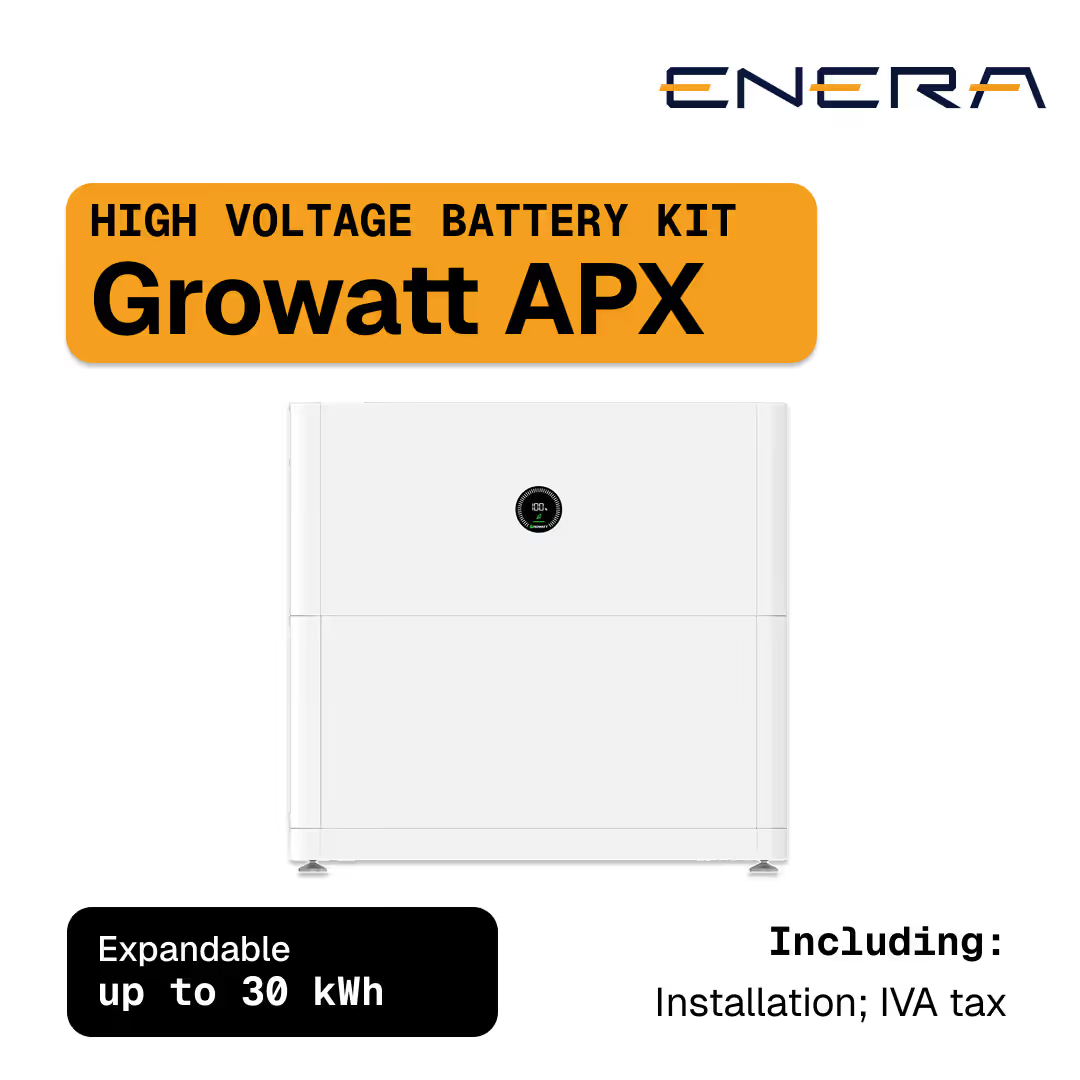
APX is the high-voltage range: 450 V nominal (380–550 V), 90% depth of discharge, rated IP66 so it can be installed outdoors, and covered by a 10-year warranty. It is the match for a grid-connected home with a hybrid inverter, and it runs from 5 to 30 kWh here.
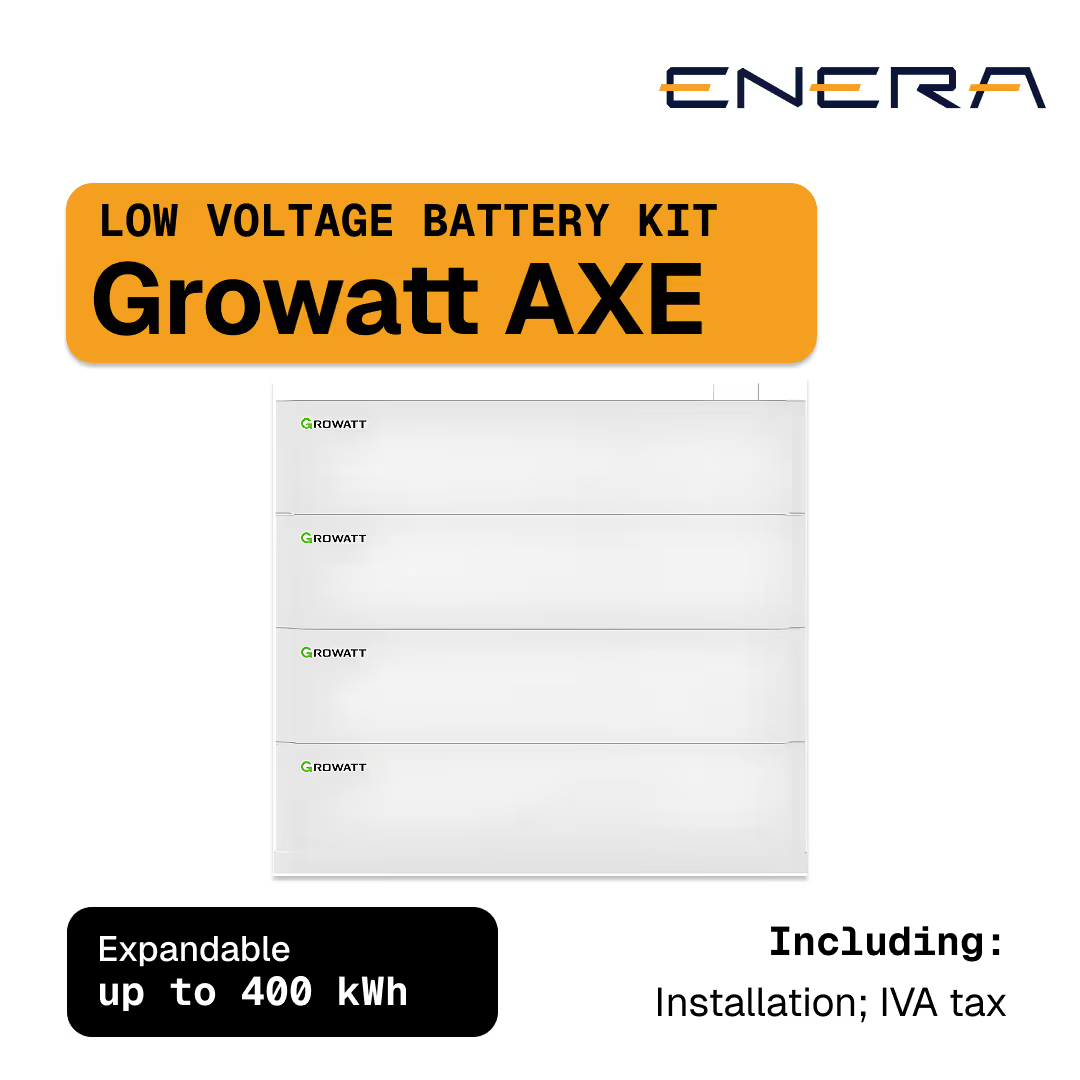
AXE is the low-voltage stack at 51.2 V, 92% depth of discharge, IP20 for an indoor location, 5 years of warranty with a 10-year option, again 5 to 30 kWh. It is the value choice on a low-voltage or off-grid inverter.
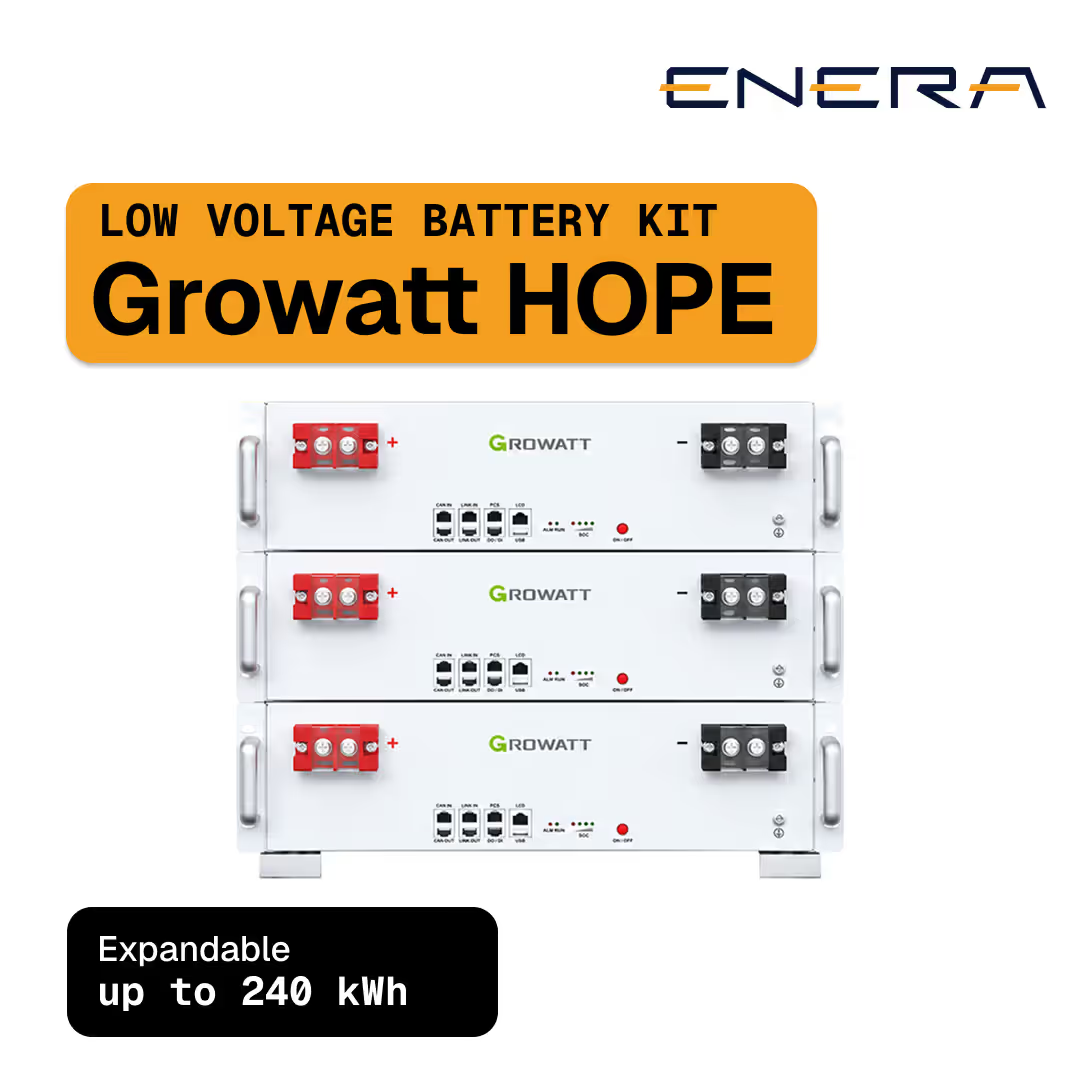
HOPE is also 51.2 V but pushes depth of discharge to 98% with more than 6,000 cycles, reaching 45 kWh here and stacking to 48 modules — 240 kWh — on request. It is the range for genuinely off-grid houses and large rural properties.
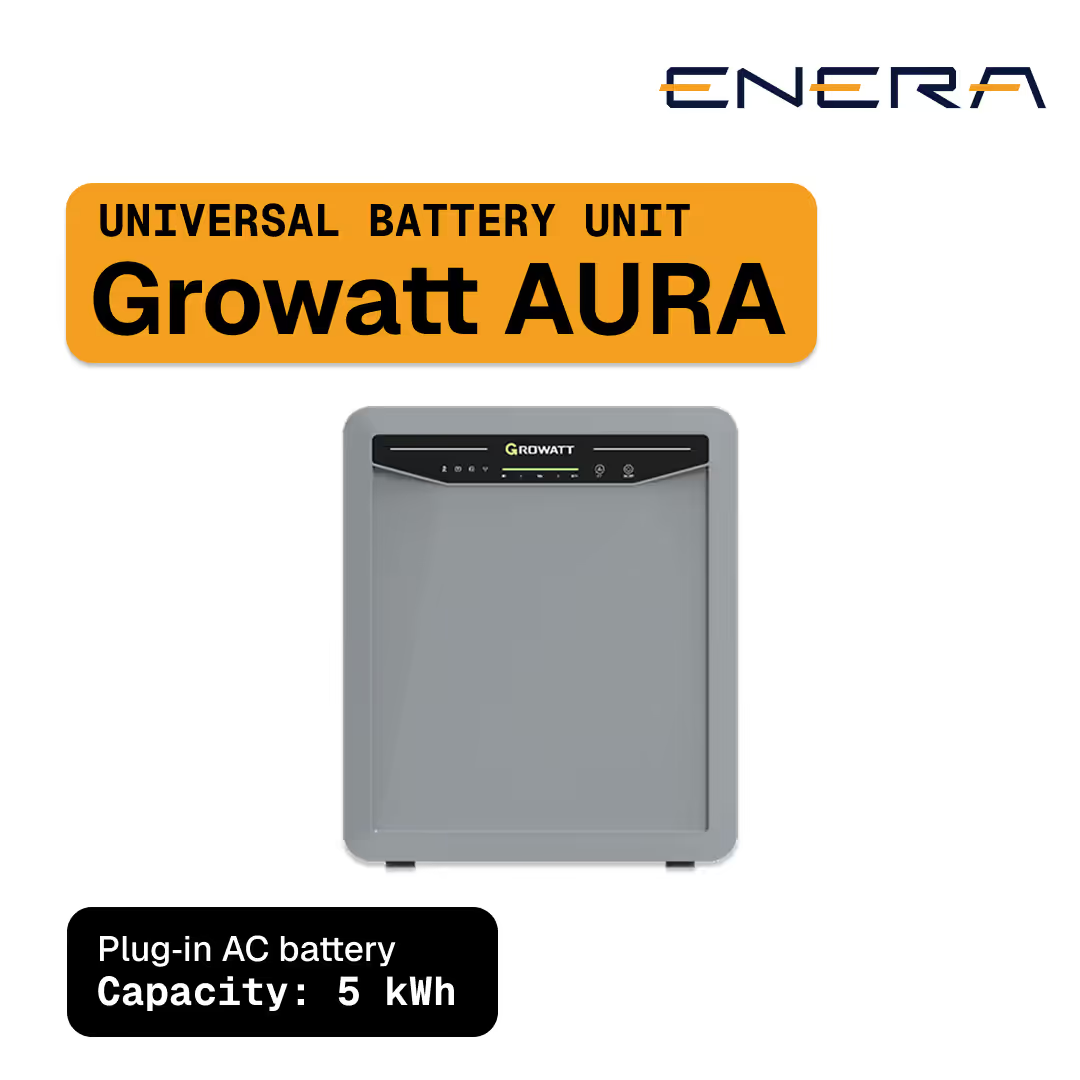
AURA is a 5 kWh plug-and-play unit, IP66, with Wi-Fi and smart-meter monitoring, universally compatible with any inverter — the retrofit answer when you already have solar and the existing inverter is not hybrid.
What the installation actually involves
These are not products you unbox and plug in. ENERA supplies and installs: a site survey first, then the DC and AC work, the communication link to the inverter over CAN or RS485, the protections, commissioning and handover with the app configured.
Location decides more than people expect. The low-voltage stacks are rated IP20 and need a dry, ventilated indoor space; the IP66 units can live outdoors on a wall. Weight matters too — a HOPE module is 43 kg on its own and a 45 kWh stack approaches 390 kg — so floors, walls and access are checked before anything is ordered. Where adding storage changes an existing registered self-consumption installation, we handle the paperwork that goes with it.