

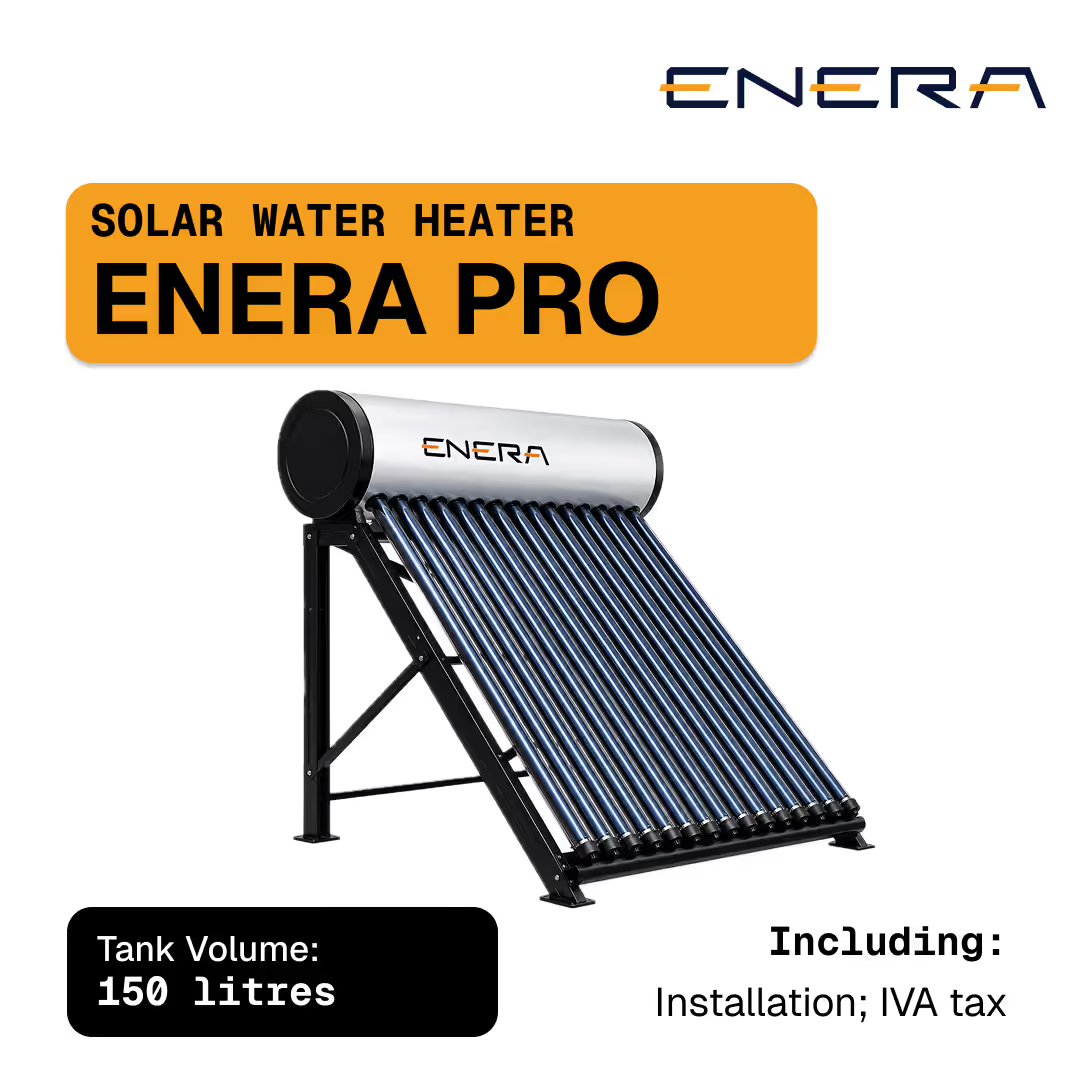
Solar hot water in Spain: how a thermosiphon system works
A solar thermosiphon — termosifón solar — makes hot water directly from sunlight. There is no pump, no controller and, in the basic version, no electricity involved at all: the tank sits above the collector, water warmed in the collector rises because it is less dense, cooler water falls to take its place, and the loop circulates itself.
Hot water is one of the larger energy loads in a Spanish home, and it is a load that solar thermal covers far more efficiently per square metre of roof than photovoltaic panels feeding an electric heater. That is the case for putting one on the roof even if you already have, or intend to have, PV.
This category currently lists 2 models with a 150 L tank, starting at 1715 € including VAT — supplied and installed.
How a thermosiphon works without pumps
Gravity does the circulation. Because the tank is mounted above the collector, the density difference between warm and cool water is enough to drive a continuous, self-regulating flow. Nothing switches on, nothing has to be told to run, and there is no circulating pump or controller to fail.
The Enera PRO takes that one step further with heat-pipe collectors. Each vacuum tube contains a sealed copper heat pipe with a condenser head that transfers heat into the tank through a dry connection. No water ever enters the tubes.
That detail has two practical consequences. If a tube is ever broken, nothing leaks and the system keeps working — the tube is replaced individually and cheaply. And because the tubes are sealed and dry, they never need internal flushing or descaling, which is the maintenance that puts people off older solar thermal systems.
Heat-pipe vacuum tubes versus flat panels
A flat-plate collector is a glazed panel with an absorber sheet and fluid running through it. It is simple and performs well when it is hot and sunny. Its weakness is losses: on a cold, windy or hazy day a flat panel gives up much of the heat it has just collected, and the whole panel is one hydraulic unit, so damage means replacing the panel.
An evacuated heat-pipe collector puts each absorber inside a vacuum, which is close to the best insulation available. It keeps performing on cold and overcast days — exactly when a hot-water system is being asked to do the most work. The Enera PRO uses Φ58 × 1800 mm borosilicate 3.3 tubes with CPC parabolic reflectors behind them, which gather diffuse light as well as direct sun, and it is built for weather rather than for a brochure: frost resistance to −40 °C, hail to 35 mm, wind to 30 m/s — force 11 — and a design life of fifteen years or more.
An honest note: through a Costa Blanca summer either technology will give a household all the hot water it can use. The difference shows in winter, inland, and at altitude.
Sizing by household
This catalogue currently lists the 150 L PRO. In practice that suits a couple or a small family — one to three people showering daily with normal kitchen use. A larger household, or a house where two bathrooms are in constant use, needs either a larger tank or a second unit; tell us how many people live there permanently and we will size it rather than guess.
The tank is stainless steel 316 with polyurethane insulation, and it holds temperature for up to 72 hours without sun. That is the number that decides whether a system is comfortable to live with: two overcast days do not mean a cold shower. Delivery temperature runs from 45 to 90 °C, and the system is pressurised to 6 bar, so it feeds ordinary mains-pressure taps and a shower without a booster pump.
It pairs with solar panels but does not need them
Photovoltaic panels make electricity; a thermosiphon makes hot water. They are complementary rather than alternatives, and neither is a prerequisite for the other.
The practical argument for both is division of labour: the thermosiphon takes the hot-water load off your electricity bill almost entirely through the warm half of the year, which leaves your PV production free to cover cooling, appliances and the car — the loads photovoltaics are actually good at.
And it works perfectly well on its own. Installed with no PV at all it still produces hot water, and it can be plumbed as a pre-heater in front of an existing gas or electric water heater, so the existing appliance only makes up the difference on the days when there is one.
Backup, upkeep and what ENERA installs
There are two versions. The solar-only model is exactly that: sunlight in, hot water out, nothing electrical. The second adds a 1500 W electric backup element and a 619-F controller with two temperature sensors, which brings the tank up to a set temperature on a programmable schedule — hot water all year regardless of the weather, and the version most people choose as their only hot-water source.
Upkeep is minimal but not zero. The magnesium anode is replaced roughly every 6 years on the solar-only model, and every 3 years on the version with the electric element, which heats the tank harder; doing it is a condition of the 2-year warranty. The tubes are sealed, so there is no flushing — an occasional rinse of the outside is all they want in dusty areas.
ENERA installs it turnkey: roof or terrace, tank mounted above the collector, fixings rated for the wind loads above, and plumbed into your existing hot-water circuit. It is not sold as a self-assembly kit.